
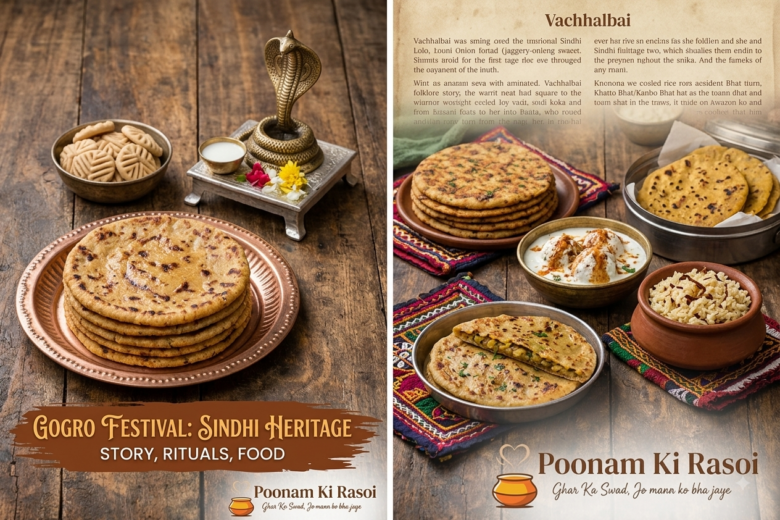
Sindhi culture is rich with festivals, stories, family traditions and food that have been passed down through generations. One such lesser-known Sindhi tradition is Gogro, also called Gogho or Gogo, which is associated with Nag Panchami.
For many Sindhi families, Gogro is more than a festival. It is a reminder of traditional beliefs, family customs and the food prepared at home for the occasion.
In 2026, Nag Panchami falls on Monday, August 17. The Panchang places it on Shukla Paksha Panchami in the month of Shravan.
Let’s learn about the story behind Gogro, its connection with Nag Panchami, traditional rituals and the food associated with this Sindhi festival.
What Is Gogro Festival?
Gogro is a Sindhi festival associated with Nag Panchami, the traditional day dedicated to the worship and reverence of snakes or Nag Devta.
In Sindhi folklore, Gogro is described as a legendary figure associated with protection from snake bites. Some cultural sources also refer to him as Gogal Devta.
The festival is traditionally observed by some Sindhi families with prayers, household rituals and specially prepared food.
The name may appear in different forms, including Gogro, Gogho and Gogo. These variations are useful to know when exploring Sindhi cultural traditions.
When Is Gogro Celebrated?
Gogro is associated with Nag Panchami, which falls on the fifth day of the bright half of Shravan.
In 2026, Nag Panchami is celebrated on August 17, Monday.
Because Hindu festival dates follow the lunar calendar, the Gregorian date changes each year. If you are reading this article in a later year, check the year’s Panchang for the exact date.
What Is the Story Behind Gogro?
According to Sindhi folklore, the story of Gogro is connected with King Gopichand and his daughter Vachhalbai.
One traditional version says that Vachhalbai encountered a flower carrying the soul of a saint. After smelling the flower, she became pregnant. Her family did not believe her explanation, and she was eventually sent away. She later gave birth to a son named Gogo or Gogro in the forest.
According to the legend, Gogro grew up in the forest and became associated with snakes. The folklore says that he developed immunity to snake poison and could help people suffering from snake bites.
This story belongs to Sindhi folklore and traditional belief, so different families and sources may tell the story with variationsmay tell the story with variations.
Why Do Sindhis Celebrate Gogro?
Gogro is connected with the broader Nag Panchami tradition of respecting and worshipping snakes.
Nag Panchami is observed across India, with devotees traditionally offering prayers and symbolic offerings to Nag Devta. The festival also carries a broader message of respecting nature and living creatures.
For Sindhi families, Gogro also represents a connection with cultural heritage and traditional beliefs.
Festivals like these help preserve stories and customs that may otherwise become less familiar to younger generations.
Gogro Puja and Traditional Rituals
Traditional Gogro rituals can differ from one Sindhi family to another.
Some families prepare food on the eve of the festival and perform Puja-related rituals the following day. One Sindhi cultural account describes Akhryun or Akhdyun, small flattened portions of sweetened wheat-flour dough, as part of the traditional Puja preparations.
The number and preparation of Akhryun can vary between families. Some families cook them on an earthen plate, while others leave them uncooked or deep-fry them.
This is an important part of understanding Sindhi traditions: there is no single ritual followed by every Sindhi family.
Family customs can change based on region, generation and household traditions.
What Food Is Prepared for Gogro?
Food is one of the most interesting parts of Gogro for anyone exploring Sindhi culture.
Traditionally, some Sindhi families prepare their food on the eve of Gogro. The following day, they eat Thadho, meaning food that has already been prepared and is eaten cold or at room temperature.
A Sindhi cultural food source describes Gogro food as similar to food prepared for Thadri, although the Puja rituals are different.
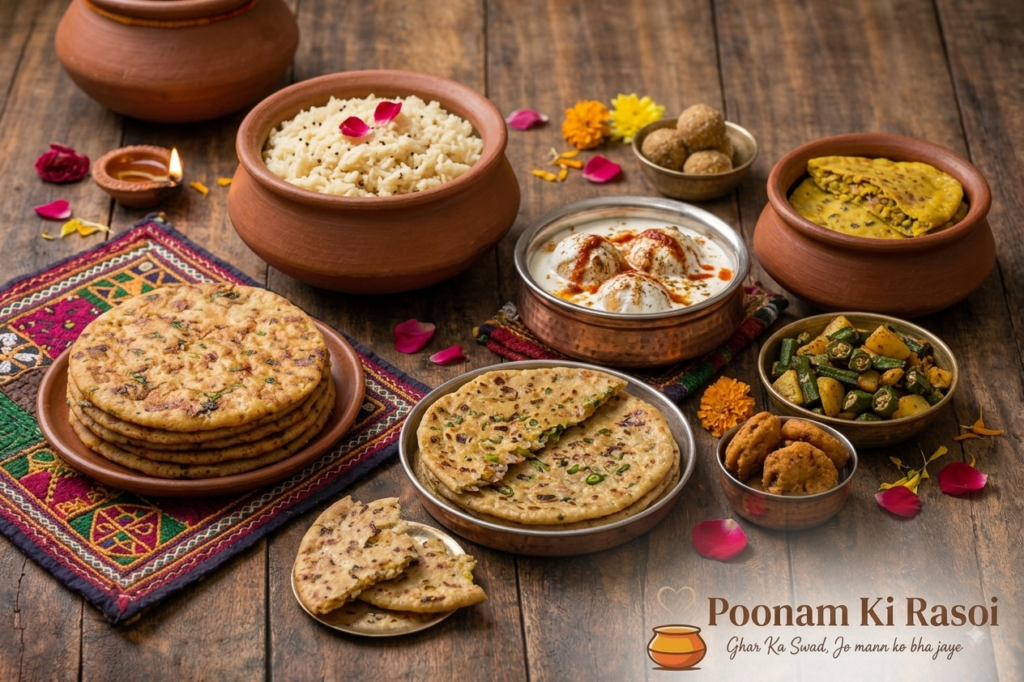
Some of the traditional foods associated with Gogro include:
1. Sindhi Lolo
Lolo is a sweet Sindhi flatbread traditionally made with whole wheat flour and jaggery.
It is one of the foods associated with Gogro and other Sindhi traditions involving food prepared in advance.
2. Sindhi Koki
Sindhi Koki is a savoury flatbread made with whole wheat flour and ingredients such as onions, green chillies, coriander and spices.
It is a popular Sindhi dish and can also be part of traditional festival food.
3. Besani
Besani is similar in style to Koki but uses gram flour instead of whole wheat flour.
4. Dal Paata
Dal Paata is a stuffed Sindhi flatbread prepared with a moong dal filling.
It is another traditional dish mentioned in connection with Gogro food preparations.
5. Fried Vegetables
Some families prepare fried vegetables such as potatoes and okra.
Other households may prepare vegetables that keep well for the following day.
6. Dahi Vada
Urad dal vadas served with beaten curd can also be part of the traditional food spread.
Some families prefer boondi raita instead.
7. Khatto Bhat or Kanbo Bhat
Some Sindhi households prepare Khatto Bhat, also called Kanbo Bhat.
It is made using cooked rice that is cooled and combined with milk, curd starter and mustard powder before being allowed to set overnight.
The food menu can vary from family to family.
Why Is Food Prepared the Day Before?
The practice of preparing food beforehand is closely connected with the tradition of eating Thadho food on the festival day.
For some Sindhi families, the stove used to prepare the festival food is not lit on Gogro itself. The food is cooked in advance so that the family can eat without cooking on the festival day.
This tradition also creates an interesting connection between food, ritual and family life.
The recipes are not simply dishes. They become part of the memory of how festivals were celebrated at home.
Is Gogro the Same as Thadri?
No, Gogro and Thadri are not exactly the same festival.
However, their food traditions can overlap.
Traditional Sindhi sources describe similar pre-cooked or Thadho foods being prepared for both occasions, while the Puja rituals and cultural contexts differ.
This is why the two festivals can sometimes be mentioned together when discussing Sindhi food traditions.
How Do Sindhi Families Celebrate Gogro Today?
The way Gogro is observed today can vary greatly.
Some Sindhi families continue traditional rituals at home or in temples. Others may preserve only certain parts of the tradition, especially the food.
Some families may no longer observe the festival at all.
A Sindhi cultural food source notes that Gogro is now observed by only a smaller portion of Sindhi families, which makes documenting the tradition particularly valuable.
For younger Sindhis growing up away from Sindh, learning about festivals such as Gogro can be a meaningful way to reconnect with family history.
Gogro and the Preservation of Sindhi Heritage
Culture is often preserved through everyday things.
A recipe written in a grandmother’s notebook can carry a family memory. A festival dish can remind someone of childhood. A traditional story can connect one generation with another.
Gogro brings many of these elements together.
It connects story, food, family, tradition and heritage.
For Sindhi families around the world, documenting these traditions can help keep them alive for future generations.
Why We Should Preserve Sindhi Festivals Like Gogro
Many traditional festivals become less familiar when families move across cities and countries or when younger generations grow up away from their ancestral communities.
Documenting these traditions gives future generations a way to understand where their food, customs and family stories came from.
Gogro is one such tradition.
By preserving its story, documenting its food and sharing the different ways families observe it, we can help keep an important part of Sindhi heritage visible.
Final Thoughts
Gogro is a beautiful example of how Sindhi culture brings together tradition, food, family and folklore.
While fewer families may observe every traditional practice today, the stories and recipes connected with festivals like Gogro are still worth documenting.
At Poonam Ki Rasoi, preserving these traditions means more than sharing recipes. It means recording the stories behind the food and keeping a connection with Sindhi heritage alive.
Because sometimes, a traditional recipe is not just food. It is a piece of family history.
Frequently Asked Questions About Gogro
What is Gogro in Sindhi culture?
Gogro is a Sindhi tradition associated with Nag Panchami. Sindhi folklore connects Gogro with snakes and traditional beliefs about protection from snake bites.
When is Gogro celebrated?
Gogro is associated with Nag Panchami. In 2026, Nag Panchami falls on Monday, August 17.
Is Gogro the same as Nag Panchami?
Gogro is the Sindhi tradition associated with the Nag Panchami observance. The names and practices may vary among Sindhi families.
What is the story of Gogro?
According to Sindhi folklore, Gogro was born to Vachhalbai, the daughter of King Gopichand, and later became associated with snakes and protection from snake bites.
What food is prepared for Gogro?
Traditional Gogro food can include Lolo, Koki, Besani, Dal Paata, fried vegetables, Dahi Vada, raita and other dishes. Food traditions can vary between families.
What is Thadho food?
Thadho refers to food that has been prepared beforehand and is eaten cold or at room temperature. It is associated with traditional Sindhi festival food practices.
Is Gogro the same as Thadri?
No. They are different festival traditions, although some food practices overlap. Sindhi sources note similarities in food preparation but differences in Puja rituals.
How do Sindhi families celebrate Gogro today?
Some families continue traditional Puja and food customs, while others observe only selected practices or may not celebrate the festival. Traditions vary from family to family.