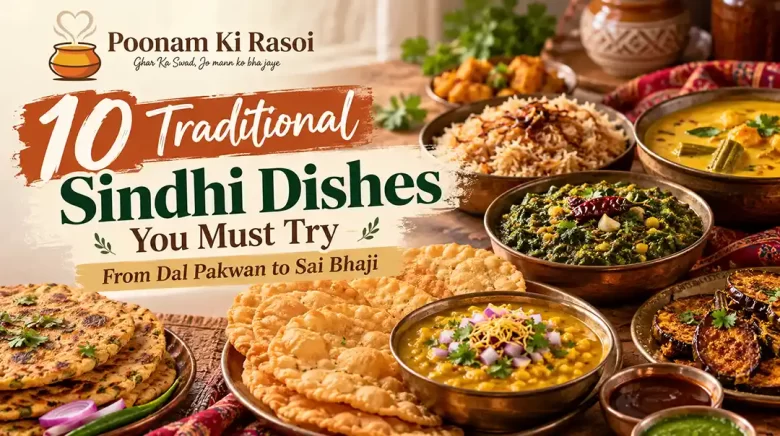
Sindhi cuisine is full of dishes that are comforting, practical, flavourful, and deeply connected to family traditions. From the famous Dal Pakwan eaten for breakfast to the everyday comfort of Sai Bhaji, traditional Sindhi dishes bring together wheat, rice, lentils, vegetables, gram flour, tamarind, spices, and generous tempering.
What makes Sindhi food particularly interesting is the balance of flavours. Tangy gravies, crisp fried accompaniments, earthy greens, caramelised onions, and spiced flatbreads appear across the cuisine. Many dishes are also designed around ordinary pantry ingredients rather than complicated preparations.
For someone discovering Sindhi food for the first time, these 10 traditional Sindhi dishes are a good place to begin.
What Makes Traditional Sindhi Food Different?
Sindhi cuisine developed in the Sindh region around the Indus River and has evolved considerably through migration and changing geography. After Partition in 1947, Sindhi communities carried their food traditions to different parts of India and beyond, where many recipes continued to be cooked in family kitchens.
A typical Sindhi meal often brings together rice or wheat with a vegetable preparation, lentils, gravy, or a crisp side dish. Ingredients such as besan, tamarind, amchur, cumin, coriander, green chilli, garlic and seasonal vegetables appear frequently.
Another characteristic is the use of texture. A soft curry may be paired with something crisp, such as aloo tuk, while a comforting dish like Sai Bhaji may be served with rice or bhuga chawal.
Here are 10 traditional Sindhi dishes worth trying.
1. Dal Pakwan
If you are looking for one dish that introduces you to Sindhi cuisine immediately, start with Dal Pakwan.
Dal Pakwan combines two contrasting elements: a bowl of spiced chana dal and crisp, deep-fried pakwan. The dal is generally seasoned with spices and served with chutneys, chopped onion, coriander and other toppings. The pakwan is broken into pieces and eaten with the dal, creating a combination of soft, spicy, tangy and crunchy textures.
It is particularly associated with Sindhi breakfast, although its popularity goes well beyond the morning meal.
What does Dal Pakwan taste like?
The dal is savoury and mildly spicy, while tamarind or other chutneys add tanginess. The pakwan contributes the crunch.
The best part is the contrast. A spoonful of dal alone is soft and comforting. Add a piece of crisp pakwan, chutney and onion, and the entire dish changes.
How is Dal Pakwan served?
A traditional serving can include:
- Chana dal
- Crisp pakwan
- Tamarind chutney
- Green chutney
- Chopped onion
- Fresh coriander
- Chilli or spices
If you have never tried Sindhi food before, Dal Pakwan is one of the easiest dishes to start with.
2. Sai Bhaji
Sai Bhaji is one of the most recognisable traditional Sindhi dishes and an important example of everyday Sindhi home cooking.
The word sai refers to green, while bhaji refers to vegetables. The dish commonly combines spinach and other leafy greens with lentils and vegetables, along with onion, tomato, ginger, garlic and spices.
Unlike a simple spinach curry, Sai Bhaji brings several ingredients together in one pot. The greens and lentils are cooked until soft, creating a thick, comforting consistency.
What does Sai Bhaji taste like?
It is earthy, savoury and mildly spiced. Depending on the household recipe, dill and other greens can contribute another layer of flavour.
Sai Bhaji is commonly served with plain rice, roti or bhuga chawal.
Why is Sai Bhaji so popular?
Because it works as an entire meal rather than simply a vegetable side dish. Greens, lentils and vegetables come together in one preparation, making it particularly suited to everyday home cooking.
For many Sindhi families, Sai Bhaji is also closely associated with the feeling of home and family food. Chef Vicky Ratnani has described Sai Bhaji with rice as a deeply symbolic comfort food in Sindhi cooking.
3. Sindhi Kadhi
Do not confuse Sindhi Kadhi with the yoghurt-based kadhi commonly found in several other parts of India.
Traditional Sindhi Kadhi is generally made using besan as the base, along with tomatoes, tamarind and a selection of vegetables. Unlike yoghurt-based kadhi, the characteristic sourness comes from ingredients such as tamarind and tomato.
Common vegetables include:
- Drumsticks
- Okra
- Potatoes
- Cluster beans
- Other seasonal vegetables
The result is a tangy, savoury gravy that is usually eaten with rice.
What makes Sindhi Kadhi special?
The combination of roasted gram flour, tangy ingredients and vegetables gives it a flavour profile quite different from yoghurt kadhi.
A classic plate often becomes Kadhi Chawal, with the kadhi poured over plain rice. A crisp side such as Aloo Tuk can complete the meal.
For anyone exploring authentic Sindhi food, this is one dish that should not be skipped.
Must check: Top 5 Quick Suji (Rava) Recipes for Busy Days
4. Sindhi Koki
Sindhi Koki is a thick, spiced wheat flatbread made with ingredients such as whole wheat flour, onion, green chilli, coriander and spices.
It is commonly eaten for breakfast, as a travel food, or with tea and accompaniments such as curd and pickle. Its dense texture also makes it different from a regular roti or paratha.
What makes Koki different from a regular paratha?
The dough itself carries much of the flavour. Chopped onion, coriander, chilli and spices are incorporated into the flour rather than being used merely as a topping.
Koki is also traditionally cooked in a way that gives it a firm, slightly crisp exterior and crumbly texture.
Serve it hot with:
- Fresh curd
- Pickle
- Green chutney
- Tea
It is one of the most practical traditional Sindhi dishes for breakfast or travel.
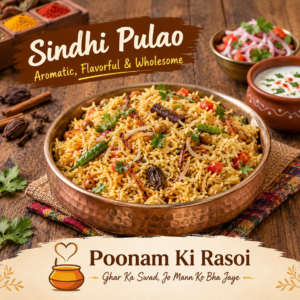
5. Bhuga Chawal
Rice is an important part of Sindhi cooking, and Bhuga Chawal demonstrates how a few basic ingredients can create a completely different flavour.
The defining step is the browning of onions before the rice is cooked. The deeply browned onions give the rice its characteristic darker colour and sweet, savoury flavour.
The rice is commonly flavoured with whole spices and served alongside dishes such as Sai Bhaji or Sindhi Kadhi.
What does Bhuga Chawal taste like?
It has a slightly sweet, deeply savoury flavour from the caramelised onions, along with the aroma of whole spices.
The important part is getting the onions right. They need to become deeply brown without burning. That browned onion base is what gives the dish its identity.
Bhuga Chawal with Sai Bhaji is one of the combinations worth trying if you want to experience Sindhi home-style food rather than isolated dishes.
6. Aloo Tuk
Sometimes the simplest dish on the plate is the one everyone reaches for first.
Aloo Tuk consists of potatoes that are cooked, flattened or cut, fried until crisp and then seasoned with spices. Amchur, chilli, cumin and other spices can be used depending on the recipe.
The result is crisp on the outside, soft inside and tangy-spicy from the seasoning.
Aloo Tuk is especially well known as an accompaniment to Sindhi Kadhi and rice.
Why does Aloo Tuk work so well with Kadhi?
Think about the textures on the plate.
Sindhi Kadhi is soft, tangy and gravy-based. Rice is fluffy and mild. Aloo Tuk brings the missing element: crunch.
That contrast is a major part of the appeal of the traditional combination.
7. Bhee Patata
Bhee Patata is a traditional Sindhi preparation featuring lotus stem and potatoes cooked with spices.
Lotus stem, also known as bhee in Sindhi cooking, has a distinctive texture. When combined with potatoes and a spiced onion-tomato masala, it becomes a hearty vegetable dish that works well with roti or rice.
Lotus stem has long had a place in Sindhi cooking, alongside vegetables and ingredients that are also found in other regional Indian cuisines.
What makes Bhee Patata worth trying?
If your idea of Sindhi food begins and ends with Dal Pakwan and Koki, Bhee Patata shows another side of the cuisine.
It is a good example of how Sindhi cooking turns vegetables into substantial main-course preparations rather than treating them simply as accompaniments.
8. Seyal Mani
Have some leftover rotis in the kitchen?
Seyal Mani is one of the traditional Sindhi ways to turn leftover bread into a completely different meal.
Seyal refers to a style of cooking in which ingredients are simmered or cooked in a moist, spiced masala. Seyal Mani uses pieces of roti with a flavourful base that can include onion, tomato, garlic, coriander, green chilli and spices.
The roti absorbs the masala, becoming soft and intensely flavoured.
Why is Seyal Mani interesting?
It represents an important quality of traditional home cooking: using what is already available.
Instead of throwing away leftover rotis, they become the base of another meal. That practicality is one reason several Sindhi dishes have remained relevant even as cooking habits have changed.
It is especially useful when you want a quick dinner without preparing an entirely new dough or grain-based dish.
9. Besan Ji Bhaji
Besan plays an important role in Sindhi cooking, and Besan Ji Bhaji is a good example of how gram flour can become part of a vegetable preparation rather than simply being used for pakoras or snacks.
The dish uses besan with vegetables, onions, tomatoes and spices, creating a thick, savoury preparation that can be served with roti or rice.
Sindhi cuisine is particularly known for using gram flour in gravies and vegetable dishes, which gives many preparations their characteristic body and flavour.
What does Besan Ji Bhaji taste like?
Expect a warm, savoury flavour with the roasted nuttiness of gram flour and the spice profile of the masala.
It is the kind of dish that works well for an everyday lunch because the ingredient list can remain relatively simple.
10. Mitho Lolo
After all the spicy, savoury and tangy dishes, it is time for something sweet.
Mitho Lolo is a traditional Sindhi sweet flatbread made with ingredients such as wheat flour, jaggery or sugar, ghee and aromatic spices such as fennel.
It is associated with Cheti Chand and other family occasions, making it an important part of the sweeter side of Sindhi food.
What does Mitho Lolo taste like?
It is rich, mildly sweet and aromatic, with a texture that is more substantial than a conventional dessert.
Mitho Lolo also shows that traditional Sindhi food is not limited to savoury breakfasts and vegetable curries. Festive cooking has its own collection of breads, sweets and rice preparations.
Must Check: How to Make Sindhi Koki – Easy Sindhi Flatbread Recipe
Traditional Sindhi Dishes at a Glance
| Dish | Type | Commonly eaten with/for |
|---|---|---|
| Dal Pakwan | Breakfast | Chana dal, chutneys and onion |
| Sai Bhaji | Main course | Rice, roti or bhuga chawal |
| Sindhi Kadhi | Curry | Rice and Aloo Tuk |
| Sindhi Koki | Flatbread | Curd, pickle or chutney |
| Bhuga Chawal | Rice dish | Sai Bhaji or Kadhi |
| Aloo Tuk | Side dish | Kadhi Chawal |
| Bhee Patata | Vegetable dish | Roti or rice |
| Seyal Mani | Roti-based meal | Spiced onion-tomato masala |
| Besan Ji Bhaji | Vegetable dish | Roti or rice |
| Mitho Lolo | Sweet flatbread | Festivals and family occasions |
What Should You Try First?
If you are completely new to traditional Sindhi dishes, you do not need to try everything at once.
Start with these combinations:
- For breakfast= Dal Pakwan or Sindhi Koki
- For a traditional home-style lunch = Sai Bhaji + Bhuga Chawal
- For a Sunday-style meal = Sindhi Kadhi + Rice + Aloo Tuk
- For something different = Bhee Patata or Seyal Mani
- For a traditional sweet = Mitho Lolo
These combinations also demonstrate something important about Sindhi cuisine: many dishes are designed to work with one another, rather than being eaten as isolated recipes.
Is Sindhi Food Vegetarian?
A large part of the Sindhi home-cooking repertoire in India is vegetarian, with dishes such as Sai Bhaji, Sindhi Kadhi, Koki, Aloo Tuk and various vegetable preparations forming an important part of everyday meals.
However, Sindhi cuisine as a whole is broader than vegetarian food. Sindhi Muslim cooking in Sindh also has a substantial tradition of meat and fish dishes, including preparations associated with mutton, chicken and fish.
So, when talking about traditional Sindhi food, it is useful to distinguish between the different Sindhi communities and regions rather than treating every Sindhi kitchen as identical.
What Spices Are Commonly Used in Sindhi Cooking?
You do not need an unusually large spice collection to cook many traditional Sindhi dishes.
Common ingredients include:
- Cumin
- Coriander
- Turmeric
- Red chilli
- Green chilli
- Garlic
- Ginger
- Tamarind
- Amchur
- Besan
- Fresh coriander
- Seasonal vegetables
- Whole spices
Sourness is particularly important in several Sindhi preparations, with ingredients such as tamarind and dried mango helping create the tangy flavour associated with dishes such as Sindhi Kadhi.
Frequently Asked Questions About Traditional Sindhi Dishes
What are the most famous traditional Sindhi dishes?
Some of the best-known traditional Sindhi dishes include Dal Pakwan, Sai Bhaji, Sindhi Kadhi, Sindhi Koki, Bhuga Chawal, Aloo Tuk, Bhee Patata and Sindhi Biryani. Dal Pakwan, Sai Bhaji and Sindhi Kadhi are particularly useful starting points for someone discovering Sindhi cuisine.
What is the most popular Sindhi breakfast?
Dal Pakwan is one of the most recognisable Sindhi breakfast dishes. It combines spiced chana dal with crisp pakwan and is commonly served with chutneys, onion and coriander.
Koki is another traditional Sindhi breakfast option, especially when served with curd, pickle or tea.
What is Sindhi food known for?
Sindhi cuisine is known for its use of wheat, rice, lentils, gram flour, vegetables, tangy ingredients and aromatic spices. It includes crisp fried accompaniments, hearty one-pot dishes, flatbreads and vegetable-based curries.
What is the difference between Sindhi Kadhi and regular Kadhi?
Traditional Sindhi Kadhi is generally based on besan, tomato and souring ingredients such as tamarind, rather than the yoghurt-based preparation found in many other Indian regional cuisines. It is usually cooked with vegetables and served with rice.
Is Sai Bhaji healthy?
Sai Bhaji combines leafy greens, lentils and vegetables in one dish, making it a nutrient-dense component of a meal. Its exact nutritional value depends on the ingredients, quantities and amount of oil or ghee used.
What is eaten with Sai Bhaji?
Sai Bhaji is commonly served with rice, roti or bhuga chawal. Bhuga chawal and Sai Bhaji make a particularly well-known Sindhi combination.
Are Sindhi dishes spicy?
Sindhi food can certainly be spicy, but heat is not the only defining characteristic. Tanginess, garlic, cumin, coriander, roasted gram flour, vegetables and contrasting textures are equally important to the cuisine.
A Taste of Sindhi Food in 10 Dishes
Traditional Sindhi dishes tell a story through everyday ingredients.
Dal Pakwan brings together crispness and creamy dal. Koki turns wheat flour into a substantial spiced flatbread. Sai Bhaji combines greens, lentils and vegetables in one comforting pot. Sindhi Kadhi uses besan and sour ingredients to create a distinctive curry, while Bhuga Chawal gets its character from deeply browned onions.
Then there is Aloo Tuk, which brings crunch to the plate, Bhee Patata for vegetable lovers, Seyal Mani for making something delicious from leftover roti, Besan Ji Bhaji for the everyday kitchen, and Mitho Lolo for festive occasions.
Together, these dishes show why Sindhi cuisine cannot be reduced to a single recipe or flavour. It is a style of cooking built around home food, practical ingredients, bold tempering, contrasting textures and recipes passed from one generation to another.
If you are beginning your journey into Sindhi food, start with Dal Pakwan, Sai Bhaji and Sindhi Kadhi. Once those flavours become familiar, explore Koki, Bhuga Chawal, Aloo Tuk and the lesser-known dishes. That is where the real breadth of traditional Sindhi cooking begins.