
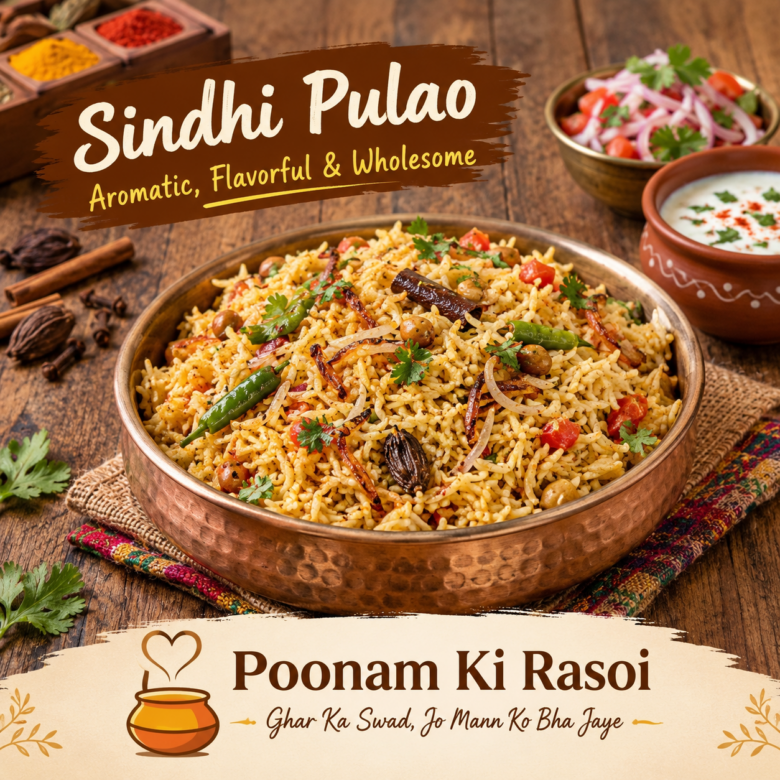
Try out This Easy Sindhi Pulao Recipe
What to cook is one of the most common questions asked by homemakers in their daily routine, especially when they have a hectic schedule. To perform this task, many of us Google and search for easy recipes for lunch and dinner. You can try Sindhi Pulao Recipe when you want to prepare a delicious and flavourful meal for lunch or dinner simply when you’re short on time. Made with basmati rice, aromatic spices, onions, tomatoes, peas and your prefered vegetables.
Here, I am sharing my personal experience. I cook food with light music that boosts my energy level after spending long hours in the office. So I choose dishes that cook easily without spending too much time in the kitchen, and Sindhi bhuga chawal is one of them. A home-cooked meal satisfies your taste buds and hunger rather than ordering food from outside.
In this blog post, I am sharing a step-by-step guide of a Sindhi pulao that satiates your taste buds and hunger.
Why Sindhi Pulao Is Perfect for a Busy Evening
The aroma of whole spices, caramelized onions, sliced potatoes, peas, and the tanginess of tomatoes. The combination of all vegetables creates a delicious rice dish. Better still, you can prepare everything in one pot without the extra work involved in making a traditional biryani.
Serve it with chilled boondi raita and crispy papad for a simple, satisfying meal.
Pro Tip: You can add or subtract vegetables as per your choice. Also, you can add something extra to try something new with the recipe.
Sindhi Pulao Recipe at a Glance
- Preparation time: 10 minutes
- Rice soaking time: 15 minutes
- Cooking time: 20–25 minutes
- Total time: Approximately 45–50 minutes
- Servings: 3–4
- Cuisine: Sindhi
- Diet: Vegetarian
- Cooking method: Stovetop or pressure cooker
- Difficulty: Easy
Cooking times may vary depending on your rice variety, stove, and cookware.
Sindhi Pulao Ingredients
You can make this home-style Sindhi Pulao with everyday kitchen ingredients. The whole spices add aroma, while the onions, tomatoes, potatoes and peas create a flavourful base.
Main Ingredients
- 1½ cups basmati rice: Long-grain basmati rice helps create a fluffy texture.
- 2 large onions: Thinly sliced.
- 2 medium tomatoes: Finely chopped.
- 2 medium potatoes: Finely chopped.
- Half Bowl Peas: Frozen or seasoned peas
- 2 tablespoons ghee or cooking oil: Ghee adds a rich aroma.
- 2–3 green chillies: Slit lengthwise, depending on your spice preference.
- A handful of fresh coriander and mint: Chopped.
- Salt to taste.
Whole Spices
- 1 bay leaf
- 1 black cardamom
- 3 green cardamoms
- 4 cloves
- 1-inch cinnamon stick
- 1 teaspoon cumin seeds (jeera)
Ground Spices
- 1 teaspoon coriander powder
- 1 teaspoon red chilli powder
- ½ teaspoon Sindhi garam masala
Adjust the green chillies and red chilli powder to suit your taste.
How to make Sindhi pulao step by step
Step 1: Wash and Soak the Rice
Rinse the basmati rice two or three times, until the water runs clearer. Soak it in fresh water for 15 minutes.
After soaking, drain the rice thoroughly and keep it aside.
Soaking helps the grains cook more evenly and can improve their texture.
Step 2: Sauté the Whole Spices
For cooking Sindhi Pulao, it’s better to use a traditional Indian vessel, the Sindhi Sipri, as it gives you the best taste. But if you don’t have one, you can use a pressure cooker or a heavy-bottomed pot.
Heat the ghee or oil in your preferred vessel. Add the bay leaf, black and green cardamoms, cloves, cinnamon, and cumin seeds. Sauté for about 30 seconds, until the spices release their aroma.
Keep the heat moderate to prevent the spices from burning.
Step 3: Cook the Onions Until Golden Brown
Add the sliced onions and cook, stirring occasionally, until they turn golden brown.
Take your time with this step. Well-browned onions give the pulao its rich colour and gently sweet flavour.
Avoid burning them, as charred onions can make the dish taste bitter.
Kitchen tip: Slice the onions evenly so they cook at a similar rate.
Step 4: Add All Vegetables
Add all vegetables: green chillies, sliced potatoes, tomatoes and peas. Sauté for about a minute, until the raw smell of the paste fades.
Next, add all the spices: coriander powder, red chilli powder, and salt.
Cook for 3–5 minutes, stirring occasionally. The tomatoes should soften and blend into a thick, aromatic masala.
Step 5: Add the Rice and Normal Water
Add the drained basmati rice to the masala and mix well with all vegetables. Gently mix for about a minute so the grains are coated with the spices.
Pour in the normal water and stir once. Taste the liquid and adjust the salt if necessary.
How much water should you add? The quantity depends on the rice variety, soaking time, and cooking vessel. For 1½ cups of soaked basmati rice, you can use approximately 2¼ cups of normal water as a starting point for the open stovetop method. Adjust this amount after testing your rice and cookware. Add more water only if the rice needs it.
Pro Tip: Avoid repeated stirring once the rice begins cooking, as this can break the grains.
Step 6: Cook Until the Rice Is Fluffy
Stovetop method
- Bring the mixture to a gentle boil.
- Cook for 12–15 minutes on high flame initially. Once the water is absorbed, cover the pot with a tight-fitting lid and reduce the heat to low.
- Check the rice near the end of the cooking time.
- Let the pulao rest, covered, for 5 minutes before opening the lid.
Pro Tip: If the rice is not cooked fully, cover the pot with a heavy marble chakla or another heavy utensil that is available in your home.
You can also try Sindhi Koki for weekends in brunch.
Pressure-cooker method
After adding the rice and water, close the pressure cooker and rice is often cooked in 2 whistles. At the same time, it may vary as per cooker and manufacturer instructions.
Use a suitable rice setting or cooking method for your particular cooker. Cooking times and pressure-release instructions vary between models, so follow the manufacturer’s guidance rather than relying on a universal whistle count.
Allow the pressure to release as directed before opening the cooker.
Step 7: Garnish and Serve
Open the lid and gently fluff the rice with a fork. Sprinkle the coriander and mint over the top. Your authentic Sindhi biryani is ready to serve!
Enjoy it hot with chilled boondi raita, crispy papad, sliced onions, or a fresh cucumber salad.
The fragrant spices, tender rice, and rich masala make every bite comforting and satisfying.
Tips for Making the Best Sindhi Pulao
Choose the Long Grain Basmati Rice
Choose the Best basmati rice (long-grain basmati rice) for making Sindhi pulao. This type of basmati rice works well for this recipe. Rinse it thoroughly, soak it for 15 minutes, and drain it before adding it to the masala.
Do Not Rush the Onions
Golden-brown onions add colour and flavour to the pulao. Cook them patiently over medium heat instead of increasing the heat to speed up the process.
Measure the Water Carefully
Too much water can make the rice mushy. The ideal amount depends on your rice variety, soaking time, and cookware. Test the quantity with your preferred cooking method before finalising the recipe.
Let the Rice Rest
After cooking, covered the pulao covered and leave for just few minutes. This helps the moisture settle and makes the grains easier to separate when you fluff the rice.
Try Simple Variations
Want to make the recipe your own? Add vegetables, cooked chickpeas, or paneer for a different texture and flavour.
If you prefer a non-vegetarian version, use a separately tested recipe that accounts for the meat’s cooking time and food safety requirements.
Enjoy a Comforting Homemade Sindhi Meal
Some recipes remind us that a satisfying meal does not need a long list of ingredients or hours in the kitchen.
This Sindhi Pulao brings together fragrant spices, golden onions, tangy tomatoes, and tender rice in one pot. It is a lovely option for busy evenings when you want something homemade without too much fuss.
Serve it with your favourite raita and papad, gather everyone around the table, and enjoy a comforting meal made with love.
At Poonam Ki Rasoi, I believe that simple ingredients and familiar flavours can make everyday meals special. Sometimes, a plate of homemade pulao is all you need to make an ordinary evening feel a little warmer.
Frequently Asked Questions
- What Makes Sindhi Pulao Different from Regular Vegetable Pulao?
This version uses golden-brown onions, whole spices, tomatoes, and Sindhi garam masala to create a rich, mildly tangy flavour.
Other pulao recipes may use different spices, vegetables, or cooking methods. Ingredients and techniques can also vary between Sindhi households.
2. Why Does My Sindhi Pulao Turn Mushy?
Too much water, overcooking, or excessive stirring can make the rice mushy.
To avoid this, rinse and soak the rice as directed, drain it thoroughly, and measure the cooking liquid carefully. Once the rice begins simmering, avoid stirring it repeatedly.
3. What Should I Serve with Sindhi Pulao?
Boondi raita, plain curd, crispy papad, cucumber salad, and sliced onions pair well with Sindhi Pulao.
If you enjoy spicy food, serve it with a green chilli pickle. For a milder meal, choose a cooling raita.
4. Can I Make Sindhi Pulao in Advance?
For the best texture, prepare the pulao shortly before serving. You can make the masala ahead to save time.
If you have leftovers, refrigerate them promptly in a covered container and reheat them thoroughly before eating. Avoid leaving cooked rice at room temperature for extended periods.
5. Is Sindhi Pulao Vegetarian?
Yes, this recipe is vegetarian when prepared with ghee or vegetable oil and served with vegetarian accompaniments.